
L3 Autonomous Driving Permits Get Green Light
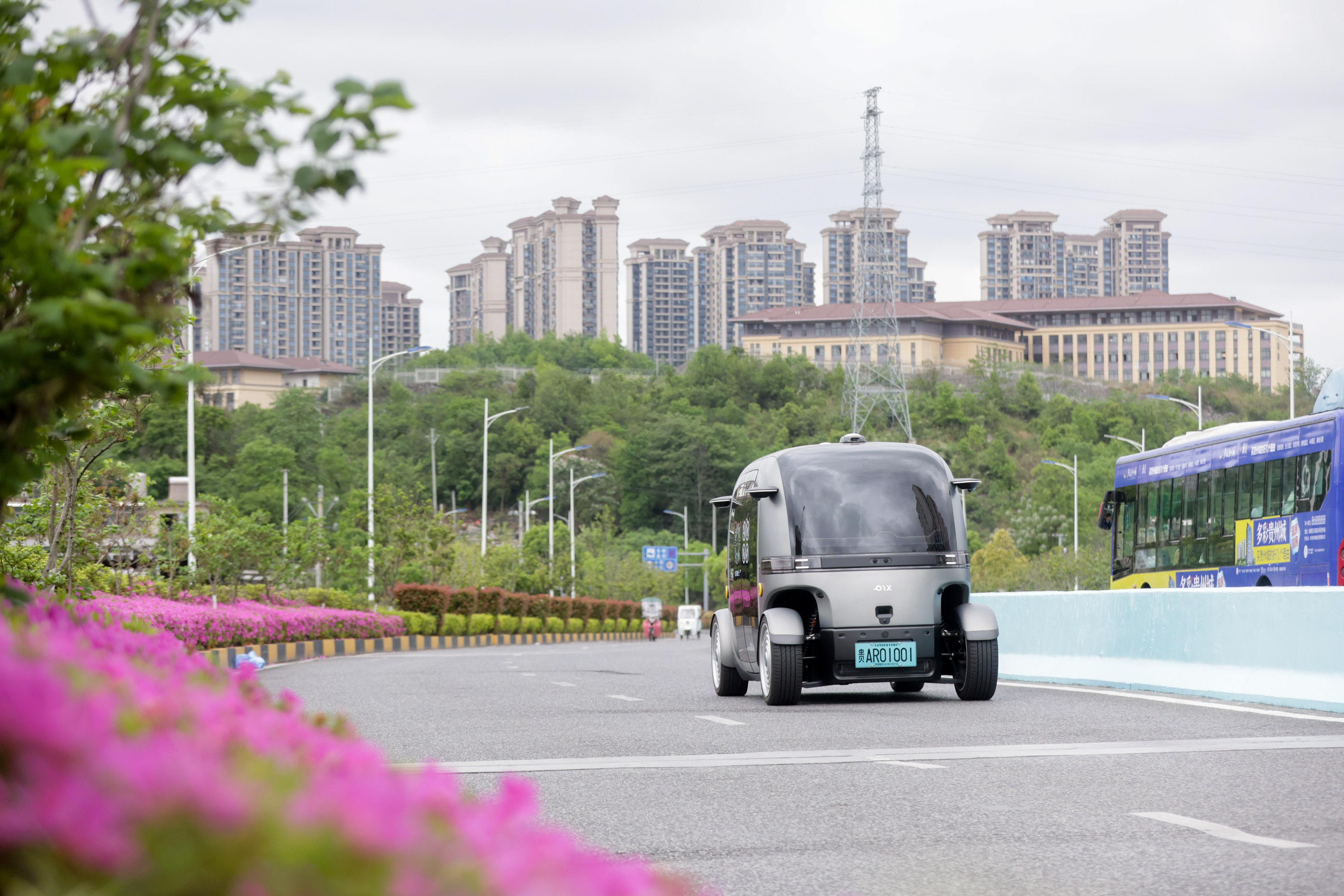
China has taken a landmark step in the development of intelligent connected vehicles, after the Ministry of Industry and Information Technology (MIIT) on December 15 granted conditional road approval to two Level-3 (L3) autonomous driving models, produced under the Changan and Arcfox brands. The decision signals a transition of China's autonomous vehicle industry from the technological verification stage to initial commercial application.
L3 autonomous driving represents a critical threshold in the evolution of vehicle automation. Under China's classification system, driving automation is divided into six levels, from L0 to L5. While L1 and L2 are considered driver-assistance systems, L3 and above formally enter the realm of automated driving. At the L3 level, the automated system can continuously perform driving tasks such as steering, acceleration, and braking under specific conditions. Drivers are no longer required to monitor the road constantly, but must be able to take over control quickly when the system requests intervention.
This transition has profound implications for responsibility allocation. Unlike L2 systems, where driving responsibility rests entirely with the human driver, L3 introduces shared responsibility among drivers, vehicle manufacturers, and system suppliers.
Experts view the approval of the first L3 models as a policy breakthrough, as it allows autonomous vehicles to enter the market as regulated products through pilot programs, setting a precedent for future commercialization.
Safety remains the central consideration in the approval process. According to industry experts, the two approved models have undergone comprehensive system safety assessments, rather than isolated functional tests. These evaluations cover the entire lifecycle of product development, including design, testing, and validation processes. Key areas assessed include scenario-handling capabilities within defined operational domains, functional safety, cybersecurity and data protection, and emergency response mechanisms. Independent testing institutions and expert reviews were also involved to ensure objectivity.
To minimize risk, the pilot program adopts a cautious, conditional approach. The approved vehicles are restricted to specific roads and scenarios and operate under real-time supervision by relevant authorities and local governments. Importantly, the vehicles will not be sold directly to consumers during the pilot phase, underscoring the principle of safety-first and gradual implementation.
The pilot trials will be conducted on selected urban expressways in Chongqing and Beijing, reflecting a controlled yet practical testing environment. Regulators have emphasized that the application channel for L3 pilots will remain open and advance on an approval basis.
More broadly, the launch of L3 pilots highlights China's commitment to balancing innovation with governance. While large-scale adoption of autonomous driving will take time, this step demonstrates that the era of automated mobility is no longer theoretical but increasingly within reach, supported by evolving regulatory frameworks and real-world validation.